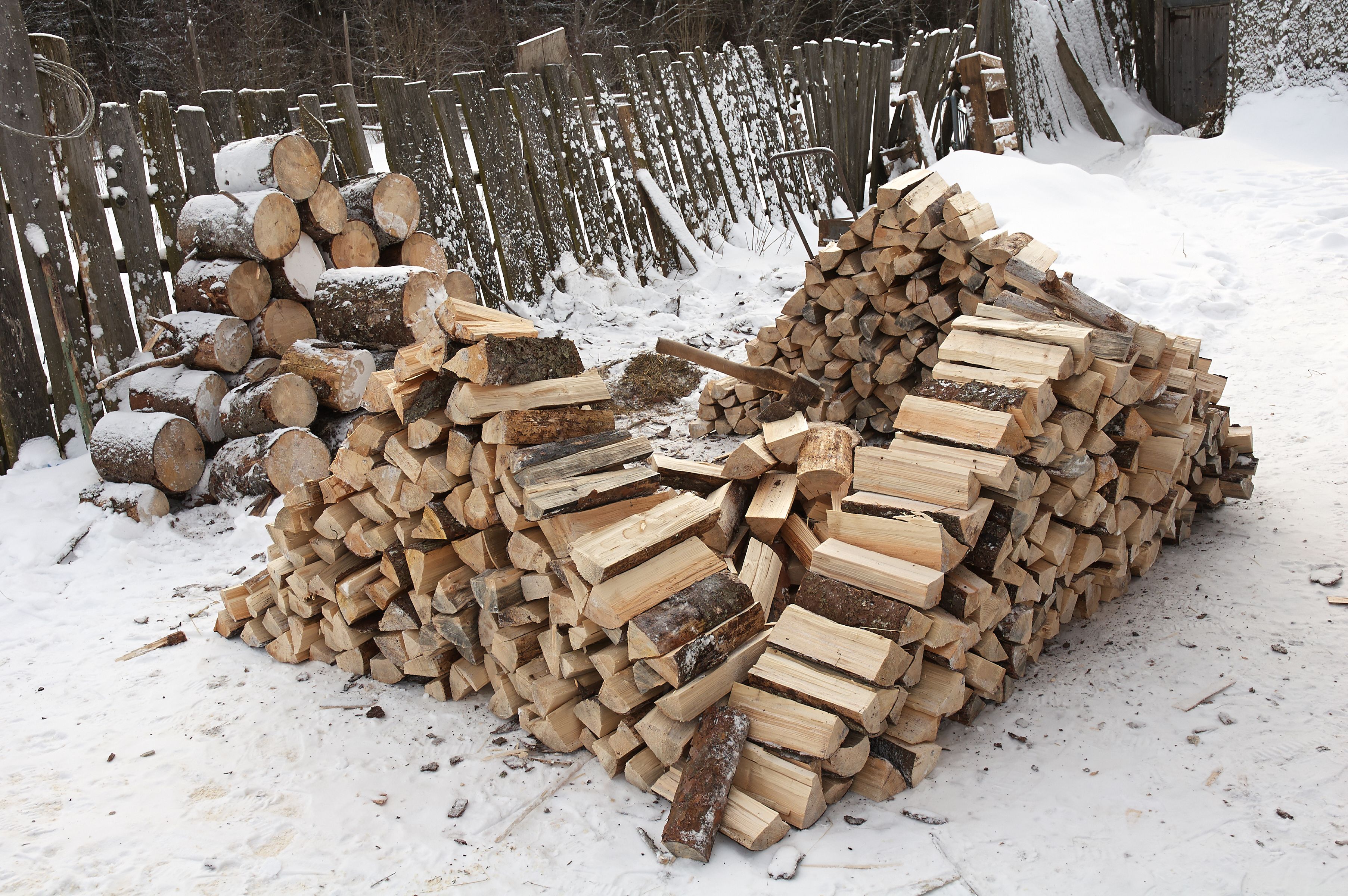
A firewood stack that dries well can still be compromised by two external factors: re-wetting from precipitation or ground moisture, and colonisation by insects or rodents looking for shelter. In Canada, where stacks typically sit outside for six months to two years before the wood is burned, both issues are routine.
Addressing them doesn't require elaborate structures. The core requirements are consistent: top cover, elevation, distance from the house, and periodic inspection.
Moisture: Where It Comes From
Dry wood can reabsorb moisture from several sources:
- Rain and snow directly on the stack: The top layer bears the most exposure. Without cover, repeated wetting cycles keep the outer pieces at high moisture levels regardless of how long they've been stacked.
- Ground moisture wicking upward: Soil, especially clay-heavy soil common in parts of Ontario and the Prairies, retains moisture and transfers it to any wood in direct contact. The bottom layer of a stack sitting on bare ground tends to rot faster than the pieces above it.
- Condensation under a tight tarp: When a tarp is pulled tightly around the whole stack, warm moist air inside the pile has nowhere to go. At night or during cool periods, this moisture condenses on the wood surface. Open-sided storage avoids this problem.
Effective Cover Approaches
The most effective top covers extend slightly past the edges of the stack on all sides, so water running off the cover clears the wood below. A 15–20 cm overhang on each side is adequate for most stack widths. Materials commonly used:
- Corrugated metal roofing sheets — durable, sheds ice well, lasts many seasons
- Corrugated polycarbonate — lighter, translucent, less prone to condensation than metal in temperature swings
- A purpose-built open-front firewood shed with a pitched roof
- A heavy tarp weighted or tied at the top edge only, with the bottom hanging free to allow air to move in from the sides
Stack Elevation
Pallets are the most commonly available elevation option and work well. Two parallel rows of pallets, spaced to support the length of the stack, provide both ground clearance and a stable base. Alternatives include concrete blocks, treated lumber 4×4 rails, or purpose-built steel firewood feet. The critical factor is keeping the bottom layer of wood at least 5–10 cm above soil or concrete.
Pest Activity: Common Species
Several pest species are regularly found in or around firewood stacks in Canada. The presence of insects or rodents in a stack does not necessarily mean wood is unusable — most insects in dry wood die when the wood is brought indoors and warmed — but it does indicate conditions that should be addressed to prevent damage to the wood supply and, more importantly, to avoid transferring pests to the house.
Carpenter Ants
Carpenter ants (Camponotus species) are among the most common structural pests in Canadian homes, and firewood stacked against or near a house provides a direct pathway for them to move into the building. They do not eat wood — they excavate galleries in soft, moist, or partially decayed wood for nesting. Signs of presence in a stack include fine wood shavings (frass) at the base of individual pieces, and visible gallery tunnels in the cut face of softwood pieces.
Carpenter ant activity in a stack is most common in wood that has stayed wet for extended periods. Keeping wood dry reduces the conditions that attract them. Firewood stored directly against a house wall, particularly at foundation level, poses the highest risk of transfer.
Wood-Boring Beetles
Several species of longhorn beetles (Cerambycidae) and bark beetles leave round or oval exit holes in firewood, often first noticed when a piece is brought indoors. Most of these species complete their life cycle in dead or dying trees and are not a structural threat to sound timber in a house, but some non-native species — including the Emerald Ash Borer and Asian Longhorn Beetle, both present in parts of Ontario and Quebec — are regulated under Canadian federal plant pest regulations. Moving firewood from infested zones is restricted to prevent their spread.
The Canadian Food Inspection Agency maintains current information on regulated pest zones and firewood movement restrictions.
Mice and Voles
Rodents use wood piles as shelter, particularly through winter. A dense, undisturbed stack with protected gaps provides ideal nesting conditions. Signs include droppings at the base of the stack, chewed cardboard or insulation materials carried in as nesting material, and visible runways in snow around the stack perimeter.
Reducing gaps at ground level and keeping the base of the stack free of leaves, bark debris, and other organic material discourages nesting. Moving the stack slightly away from fence lines and dense vegetation reduces rodent access routes.
Bringing Firewood Indoors
Standard practice for wood-heated homes is to bring in only a day or two of firewood at a time rather than storing a large quantity indoors. This limits both the number of insects that can emerge from warming wood indoors and the amount of moisture that dry firewood can draw from humid indoor air in winter, which it will reabsorb slightly when stored in a warm room.
The Canadian Food Inspection Agency advises against moving firewood more than 50 km from where it was cut in areas where regulated wood pests are present. Information on current regulated pest zones is available on the CFIA website.
Seasonal Maintenance
A brief inspection of the stack at the start and end of each heating season takes only a few minutes and identifies problems before they compound. Look for:
- Pieces at the bottom or back that show signs of soft rot or mould — remove and use these first or discard them
- Visible insect tunnelling or frass accumulation under any individual pieces
- Evidence of rodent nesting in the lower layers
- Top cover displacement or damage after storms
- Leaning or partial collapse of end supports